
Zimbabwe and Namibia are preparing to cull hundreds of wild elephants and other animals in response to severe drought, leaving many communities needing food.
Officials from both countries announced that the meat will be distributed to those facing hunger due to worsening drought conditions in southern Africa.
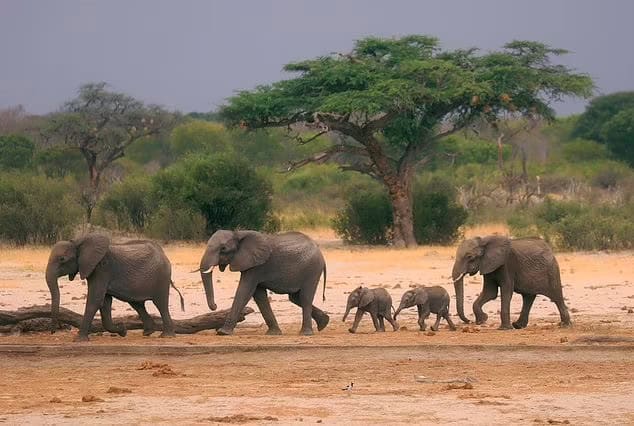
Zimbabwe’s National Parks and Wildlife Management Authority spokesperson, Tinashe Farawo, stated that permits would soon be issued to allow the hunting of 200 elephants. The agency will also directly kill some elephants to distribute the meat.
The elephants will be culled in areas like Hwange National Park, where the harsh climate has escalated competition for dwindling resources between humans and wildlife.
Hwange National Park, home to more than 45,000 elephants, now has the capacity to sustain only 15,000, according to park officials.
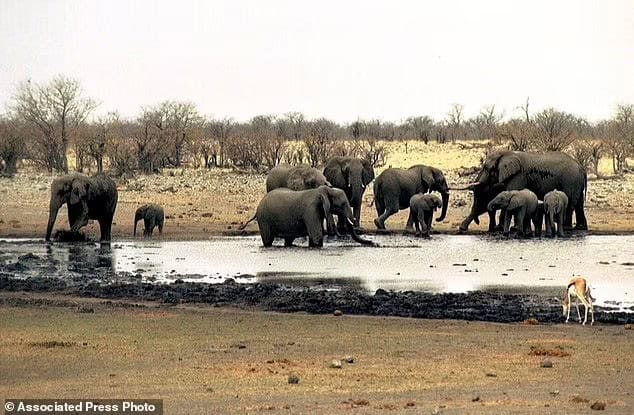
The elephant population in Zimbabwe is estimated to be around 100,000, double what the country’s parks can handle.
The El Niño weather phenomenon has further exacerbated the situation, with over 100 elephants dying from drought-related causes in December and more animals likely to suffer the same fate as temperatures rise.
Zimbabwe’s Environment Minister, Sithembiso Nyoni, emphasized that the culling program is necessary due to the excessive elephant population.
She explained that the government plans to mobilize communities, especially women, to dry and package the meat for distribution to those in need.
Similarly, Namibia recently decided to cull 723 animals, including 83 elephants, hippos, buffalos, zebras, and other species.
These animals will be taken from five of the country’s national parks as part of a broader strategy to manage the conflict between wildlife and humans, according to Environment Department spokesperson Romeo Muyunda.
He highlighted that this approach aligns with Namibia’s constitutional responsibility to use natural resources for the benefit of its citizens.
While Botswana, which neighbors Zimbabwe and Namibia and has the world’s largest elephant population of 130,000, has not made similar moves, officials in Zimbabwe and Namibia argue that their culling programs are necessary.
Guyo Roba, a food security and agricultural expert from the Jameel Observatory, stated that although the decision may seem controversial, it is a practical measure given the severe drought and the challenges posed by unsustainable wildlife populations.
Read more Elephant News.


